We've had a good response so far to
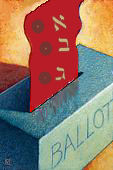
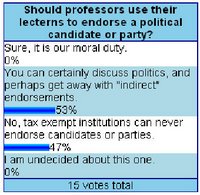
our poll on the place of politics in the classroom, with 15 votes registered so far. Interestingly, of these 15 votes, no one believes the professor's lectern is to be used outright to support a political candidate or party. Also, everyone who voted has probably already given some thought to this issue, since there were no undecideds.
The two middle options are fairly close: a little more than half of you voted: "You can certainly discuss politics, and perhaps get away with 'indirect' endorsements." A little less than half of you voted, "No, tax exempt institutions can never endorse candidates or parties." Let's pause for some reflections. As always, I would be most interested in
your comments (just add them to the end of this post). Let us agree that we are not talking about posting political views on personal blogs, personal-car bumper stickers, and the like. This is about what is said in the classroom, posted on one's office door, or preached in the seminary chapel.
First, let me say that I believe that this issue should be given extra thought for members of a theological faculty. (Extra thought, that is, beyond the threat of the recent crackdown by the IRS on non-profits who are entering the political fray vocally.) I believe that seminary faculty should pour their energy into getting students to think
theologically. If one jumps to identify theology with a given political ideology or platform too soon, you have shortcircuited your calling as a divinity professor. Do others agree?
Yet, I can agree with the 53% who vote for indirect endorsements from the professor's lectern. Perhaps especially in Old Testament studies, we know that our subject matter impels us all, liberal, moderate, or conservative, to take a stand, act on our beliefs, and make a difference in the real world of politics. You can model that for students, as long as the students know they are free to concretize this move in their own way, respecting their own political decision making.
I must say that another part of me fully agrees with the 47% who voted against endorsing political candidates or parties. Doing this even indirectly can often have a chilling effect on academic freedom and dialog at one's school. Recently at my school, a solid group of students has felt that their (more conservative) views are disrespected. I am sure they are not making this up. I won't name names, but I have heard some very strong and specific messages from the seminary pulpit at times and I can see plainly what people are posting on their office doors...
Labels: poll