Wednesday, January 31, 2007

Creating Space for Theological Reflection on the Two Christian Testaments

Jeremy made a very helpful comment on yesterday's post regarding my reflection on servanthood and artwork. I think he hits the nail on the head when he unviels the influence that Brevard Childs has had on my thinking. He writes:

You noted that, “The crucified one is a true "Servant" in the sense that both testaments of the Scriptures labor to flesh out the nature of "servanthood." It seems that Childs’ influence is helping you frame your study of servanthood in the sense that you are asking how both testaments are discrete witnesses to their subject (i.e. Christ). Personally, I think a large benefit of Childs project is not ultimately in his specific theological exegesis (only his exegesis is quite helpful and we are lucky to have it) but his ability to create a space for others to do Christian theological exegesis. In other words, by struggling to come to terms with the importance of a two testament Christian canon that sees 1. the relationship between the two testaments more than simply prequel and sequel and 2. our relationship to these testaments as different than that of the prophets and apostles, Childs tries to supply a framework from others to do Christian theological exegesis that is both spiritual (scripture as a witness to God) and disciplined (it takes seriously the notion of canon and fleshes out the consequences of this notion).

I mention this because I think his canonical proposals are often unfairly characterized as limiting exegetical work rather providing a framework for it. Partly, I think this is because his “Biblical Theology of the Old and New Testament” did not make as big an impact on the field of biblical theology as his earlier works did, which is unfortunate. Nonetheless, it seems to me that you are showing very creatively how his canonical proposals can help one reflect on/develop a biblical theology of servanthood in both a spiritual and disciplined manner. --Jeremy


Warm thanks for these perceptive and welcome thoughts. Further comments welcome...

The Chosen Beer

Hebrew Beer! Someone here at the seminary has placed in my box a large bottle of Hebrew Beer! And, I noticed an identical bottle of Hebrew Beer in my colleague Dr. Judy's box. I am looking forward to tasting this brew! But, who is it from? A small church-mouse has whispered the names of Kyle and Ari... I will have to check...

The Anxiety of Influence

RBP has made a very helpful comment to my preceding entry, which was my initial thoughts on PamBG's query about the question of method in the theological interpretation of art. RBP's comment is of such interest, that I'm elevating it here to a post:

For what it's worth, I think that this sort of thing is definitely legitimate. I like things that cross disciplinary boundaries. And I think that authorial intention (defining author broadly here to inclue all artists), although important, is not the only important thing out there. Don't get me wrong, the author is important. I don't think that the author is "dead." The reader's perspective on the text (defining text broadly here to include all art), bringing their entire perspective is also important and meaning is discovered in the interaction between the reader with all of their history, knowledge, experience, etc. and the author with all of their history, knowledge, experience, etc.

As to whether or not the painter had the Suffering Servant in his mind: Umberto Eco has a great essay called "Borges and My Anxiety of Influence" in On Literature in which he explores/outlines the concept of influence and all of the different dimensions of influence. He originally gave the essay as a talk at a conference in which scholars talked about his work. He talked about how intrigued he was by the literary echoes and influences that people were claiming his work contained. Some presenters he knew were right on, because he had read the work cited and had had that work on his mind when writing his piece. Some presenters he knew were wrong, because he had never read the work cited. Other presenters, he was skeptical at first, but then he remembered that he had read that work, but had forgotten about it. That work is still an influence, even if he wasn't directly thinking about it. It was in the back of his mind or had shaped him in ways that weren't direct, but definitely influential. The painter likely knew of the suffering servant concept at some level, even if he wasn't directly thinking about it. Eco also goes onto to say that the whole thing is more complicated than all that, because there are works that influence other works that we then are influenced by. At the very least, the suffering servant influenced the writers of the Gospels and the Church theology that influenced the painter.

Additional discussion and comments welcome...

Tuesday, January 30, 2007

A Question of Method...

In the comments to the preceding post, PamBG asks a very good question:

Just clear something up for me. This is a mediation on the painting? Or an exegesis of Isaiah? Or are you using the painting as an illustration of your exegetical points? (Not being critical, just wanting to understand.)

Let me respond briefly, and then invite reader comments:
the blogging professor
Thanks for this question, PamBG! No, I have no idea whether the painter had in mind Isaiah or any of these particular theological reflections. Responding to the painting, the art brings up Isaiah's theology for me and seems to express it visually. I guess what I have written is my "viewer response" as a theological thinker. Do you think this mode of reflection is legitimate? I am trying to craft a way of studying an artwork such as this as an exercise that is both spiritual and disciplined. Comments on method are most welcome... ---Steve

"He Will See His Offspring" (Isaiah 53:10)

A few more thoughts on biblical Servanthood and the Rembrandt Workshop painting, Descent from the Cross, which I blogged about yesterday.

One of the most intriguing features of the Servant of the Lord in the book of Isaiah is how he generates a progeny or "seed." The Suffering Servant is the progenitor or "first fruits" of a growing group of "servants" (plural) of the Lord. These "offspring" become the main protagonists in the final, third section of Isaiah, chapters 56-66 as W. A. M. Beuken has most powerfully demonstrated in recent years. Like their progenitor, they are all reverent, humble, full of God's power and not their own.

When you approach yesterday's artwork with this lens, you immediately notice that Christ is not the only suffering servant highlighted. Look closely at the image of Christ and the image of his mother:


The torchlight falls on Christ but also on his mother as well. An arm supports Mary's, wrapped around her tummy, just as with Christ. The expressions of accomplished suffering are very similar on both their faces. Both have a right arm that droops in a similar fashion. Surely they are both suffering servants, parallel in their servanthood.

For me, this parallelism between Christ and Mary invites the viewer to imagine that the honor and call of Servanthood does not belong to Christ exclusively. Those who love him and desire to follow him partake of the same role. As in Isaiah 53:10, "He will see his offspring."

Labels:

Monday, January 29, 2007

Rembrandt Workshop / A. W. Tozer / Biblical Servanthood

Descent from the Cross

What is the meaning of "servanthood" in biblical theology? I have a book project on this question, far from finished, to be published eventually by Church press. As I work on the problem, I am getting some great inspiration from this painting (ca. 1651) by the Rembrandt Workshop (Probably Constantijn van Renesse), entitled "The Descent from the Cross." The painting is on display here in DC in the National Gallery (click here).

I came across a wonderful quote of A. W. Tozer in the nakedpastor blog (click here). Tozer, in "The Old and the New Cross," is reflecting on the constant temptation we experience to domesticate the Cross, to make it something more "acceptable" to us and to the public. Tozer speaks of the new, domesticated cross as something that does not slay the sinner, but merely redirects him or her. "It gears him into a cleaner and jollier way of living and saves his self-respect. To the self-assertive it says, ‘Come and assert yourself in Christ.’ To the egoist it says, ‘Come and do your boasting in the Lord.’"

This is a false meaning of the cross. As in the artwork, The Descent from the Cross, the crucified one is lank and spindly, totally vulnerable. The crucified one is a true "Servant" in the sense that both testaments of the Scriptures labor to flesh out the nature of "servanthood." God works most powerfully through the Servant when the Servant reveals his/her full frailty. The Servant becomes the instrument of God's power and beauty as she/he displays true vulnerability as a human being and creature of God, lets go of orientation on the self, and directs one's love totally outward toward God and neighbor. The crucified one dies to self and lives anew for the Other.

Tozer writes, "The old cross is a symbol of death. It stands for the abrupt, violent end of a human being. The man in Roman-times who took up his cross and started down the road had already said good-bye to his friends. He was not coming back. He was going out to have it ended. The cross made no compromise, modified nothing, spared nothing; it slew all of the man, completely and for good. It did not try to keep on good terms with its victim. It struck cruel and hard, and when it had finished its work, the man was no more."

I am teaching a VTS evening school course on "Servanthood" this term, so I shall be developing some of these themes in the near future. Stay tuned...

Labels:

Sunday, January 28, 2007

[post deleted]

[this post has been deleted in response to request]

Ezra and "Outsiders"

Ezra Promotes the TorahOver on his Blue Cord blog, my friend Prof. Kevin Wilson has graciously linked to my recent post on Ezra's social location and raised some fascinating questions for discussion (click here). Thank you, Kevin!

One of the questions he raises is the following: "It seems to me that Ezra is not among those who edited the final version [of the Pentateuch]. The Holiness School [which seems responsible for this final editing] has a great openness towards outsiders, as can be seen in the repeated admonition that there should be one law for the Israelite and alien alike. Ezra, on the other hand, is not so open to outsiders, at least when they are getting married to Israelites. Any thoughts on this Steve?"

Let me make a few notes in response to Kevin. Following R. E. Friedman, I do consider Ezra a viable candidate for one of the final editors of the Pentateuch, but in my view he is not an extremely likely candidate. More and more, I am thinking that the the bulk of Israel's sacred literature came together before exilic and postexilic times, such as those of Ezra. I admit that William Schniedewind's recent work on this question has been strongly influencing me (click here).
On the one hand, Friedman does a good job of showing that Ezra's Pentateuch probably contained most all of the strands that today make it up. On the other hand, the impression of Nehemiah 8 is that Ezra is promulgating a compilation of these strands that has been around for awhile. His Torah is extant, in Hebrew. The primary job for him and his allies is to translate it into Aramaic and interpret it, not to introduce it for the first time.
Nevertheless, Ezra could have been one of the Torah's final editors. Certainly his purported "exclusivity" does not disqualify him. As I understand Ezra, the issue for him was not exclusion of foreigners or xenophobia, but holding the line against syncretism and apostasy in worship. I do not think that Ezra had any problem with marrying proselytes, only with marrying idolaters. Ezra, HS, and PT, all three, are on the same page on this minimal level.

I strongly disagree with older scholarly divisions between "universalism" and "particularism/legalism" in the postexilic period. Contrary to this idea, I understand openness to proselytes to have been the norm in most all the relevant biblical texts (see Blenkinsopp, AB 19B, p. 83).


Responses and Comments welcome.

Saturday, January 27, 2007

The Slavonic Pseudepigrapha Project

click to visit the site

I have received notice today via personal email of a new scholarly resource on Second Temple Jewish literature preserved in the Slavic Milieux. Developed by the scholars from the Theology Department at Marquette University (Milwaukee, USA), the resource provides original manuscripts, translations, and extensive bibliographies to a range of pseudepigraphical materials. To visit this on-line resource, click here.
The works available include the following:
Slavonic Life of Adam and Eve; Adam Octipartite; 2 Enoch; Sataniel Text; Apocalypse of Abraham; Testament of Abraham; The Ladder of Jacob; Joseph and Aseneth; Testaments of the Twelve Patriarchs; Testament of Job; Life of Moses; Apocryphal Fragments about David, Solomon, and Elijah; Ascension of Isaiah; 3 Baruch; 4 Baruch; Pseudo-Danielic Fragments; Apocalypse of Zosimus; Ahiqar; The Word of the Blessed Zerubabell The Josippon; Palaea Historica; Interpretive Palaea; and Palaea Chronographica.

Bosch, The Garden of Eden

Bosch

There are many paintings of Eden from art history, but one of the most intriguing for me is The Earthly Paradise, painted by the Netherlandish artist Hieronymus Bosch. It is part of his The Garden of Earthly Delights triptych (ca .1503-4; Prado, Madrid). The intricacy of the work reminds of Pieter Bruegel's art, of which I am also a great fan. But Bosch's painting is more visionary, unearthly, and fascinatingly disturbing. The images are archetypal and alchemical, which is very appropriate for the Adam and Eve story. Carl Jung viewed Bosch's startling symbolism as ultimately deriving from the collective unconscious. The tryptich is now displayed in the Museo Nacional del Prado in Madrid, Spain.

Bosch detail

Toward the center of the panel is the fountain of life in the form of a Gothic monument. The fountain itself is not strictly biblical, but it does fit with the biblical and ancient Near Eastern image of waters of life flowing down to earth from Eden. To the far right of the fountain you can see the Tree of Knowledge, with the serpent coiled around it. The center panel of the tryptich (not shown) depicts the fallen world, and the tree is positioned so as to lead the eyes into that panel.

Bosch detail

In the bottom third of the image, God (in the form of Jesus, the creative Word) introduces newly formed Eve to Adam. Behind Adam a fantastic cactus symbolizes the Tree of Life. But even at this tender moment of introduction, there are clear signs that all is not well. Elements at the bottom of the painting, especially the mouse in the cat's mouth, herald the imminent arrival of violence and sin into the world.

Labels:

Evensong at York Minster in York, England

Nominations Needed for New Blog Carnival

Blog Carnival
Anything on this blog caught your eye this month? Why not nominate it for the upcoming Carnival of Bible Blogs to be hosted on Chris Weimer's blog? Just submit/nominate any post or series of posts that you've enjoyed. Click here to see Chris's instructions, or use the submission form at the BlogCarnval site (click here), or simply send a brief email with your nomination to biblical_studies_carnival AT hotmail DOT com.

Friday, January 26, 2007

Jeremiah 1, continued (4 Epiphany, Year C)

Let's continue our exposition of the appointed lesson for this Sunday, the fourth Sunday after Epiphany, Year C, Jeremiah 1:4-10. For the preceding post on this text, click here. In this post, I want to look especially at Jeremiah 1:5b, where God says, "I have appointed you a prophet to the nations."

prophet to the nations

The introductory chapter of Jeremiah lays out what will become clear in the rest of the book, that the God of Jeremiah has the entire world and all its nations on the potter's wheel. The Sovereign Potter is at work squashing and remaking a huge, global vessel of clay on the wheel.

Speaking of this in Jeremiah 18, God says, "Or at another moment I might speak concerning a nation or concerning a kingdom to build up or to plant it; if it does evil in my sight by not obeying my voice, then I will think better..." (18:9-10).

The Potter is not capricious, but is working with the clay to produce a beautiful artwork. The clay is free to be non-cooperative, but it is not free to declare itself something other than clay. To do so would be simple hubris!

The "universalistic" (global) perspective of the book of Jeremiah reaches one of its heights at Jeremiah 16:19–21. In this passage, the book makes reference to God’s planned salvation of the nations. (A similar vision is found in multiple other OT texts, including 1 Kgs 8:41–43; Ruth 1:16; Pss 22:27; 67:2; 68:31–32; 102:22; Isa 18:7; 19:19–22; Jer 3:17; 4:2; 12:16; Zech 8:20–23; 14:16; and Mal 1:11.)

The Jeremiah 16 text looks beyond the coming judgment on Judah to contemplate the goal of history in the nations rallying around Yahweh. Converting to Yahweh, earth’s peoples make the astounding confession that their traditional gods were never gods at all. This view of the nations is here attested well before the time of 2 Isaiah and the late exilic period when many scholars suppose such notions first emerged!

The Cyrus Cylinder


King Cyrus (the Great) of Persia was a huge player on the stage of history behind the second half of the book of Isaiah. The Isaiah community admired him for his acts of liberation and his spirit of reverence and tolerance of local traditions. The Cyrus Cylinder, a major artifact in biblical studies, gives us a window into Cyrus' image and policy in the late exilic and early postexilic era. This cuneiform text also gives the biblical historian helpful data for reconstructing the fall of Babylon to Cyrus and the Persian Empire and the period of the beginning of Israel's restoration. See Ezra 1:1-6; 6:1-5.

There is a neat WebSite on the Cyrus Cylinder, which contains a complete translation and some good discussion. To access all this, click here.

The Cylinder was discovered in 1879 and is now in the British Museum.

Thursday, January 25, 2007

The Seal of a Woman

Seal of a Woman
In the times of Jeremiah and Habakkuk, around the early 6th century bce, a woman was buried in the Iron Age Tombs at Mamillah, Jerusalem, near the Jaffa Gate. Her name was yhwhḥn, "YaHWe(H) has shown grace." Most interestingly, she left an impression of her seal in the tomb, and you can see her name in the top line of this artistic recreation, right after an initial "l" in the upper right, meaning "belonging to..." The bottom line reads, "daughter of pqʿt."

At the Abnormal Interests blog, Duane has a full description of this seal which is well worth a look (click here).


Commenting on this "seal of a woman," Duane notes how interesting it is that a simple (non-privileged) woman in this society had some importance as a crafts-person or trades-person, who needed to seal documents or objects associated with her business. If we assume she could read her own seal, she was also literate!

Wednesday, January 24, 2007

"Laundry" (humor)

cartoon from www.weblogcartoons.com

Cartoon by Dave Walker. Find more cartoons you can freely re-use on your blog at We Blog Cartoons.

Labels:

4 Epiphany, Year C: Jeremiah 1:4-10

The appointed lesson for this Sunday, the fourth Sunday after Epiphany, Year C, is Jeremiah 1:4-10. This is the amazing narrative of God's call of Jeremiah to be a prophet. It's great; let's dive right in.

Jeremiah's Call

This story of Jeremiah's commissioning strongly invites us to see Jeremiah as one who takes up the mantle of Moses. The excuses of the prophet in 1:6-8 are the same as those of Moses, namely, a lack of authority (cf. Exodus 4:1) and an inability to speak well (cf. Exodus 4:10). God's response and provision in Jeremiah 1:9 echoes the promise of Deuteronomy 18:18 that God will send a "prophet like Moses" and "put my words in his mouth." In a recent post about Elijah (click here), I mentioned the biblical tradition that God raises up a "prophet like Moses" for each generation to represent and communicate God's awesome, spine-tingling reality before the people. Jeremiah is certainly this kind of prophet.

Jeremiah's new role as Moses entails his radical self involvement and self sacrifice. We should thank the Lord every day that we are not called to Jeremiah's task. As a true intermediary, Jeremiah will quickly get radically and personally caught up in God's burning anger and wrenching pain over the people's sin and God's steadfast purpose to bring them back into the covenant. As 1:10 says, Jeremiah must both destroy and build, must both pluck up and plant. The book of Jeremiah echoes these phrases at 18:7; 24:6; 31:28, 40; 42:10; and 45:4. Jeremiah must perform seemingly contradictory tasks. If that were not enough to split his personality, as a Mosaic intermediary Jeremiah finds himself representing, often in quick succession, God's word, the voice of the people, and his own inner struggle. As we listen to Jeremiah's words throughout the book, we hear, alternately, his own inner words, a voice in radical empathy with Yahweh, and a voice in deep sympathy with the people. The emotionally overwhelming role of intermediary quickly tears Jeremiah up.

Read the book of Jeremiah not to become like Jeremiah in his anguish, but to see in him an interpretation of God's interrelations with God's people. Jeremiah embodies the divine-human encounter. He gives us readers a metaphor and paradigm of God's word in interaction with humanity.

In Jeremiah's persona we learn theology. We see God's wonder-working Word stirring things up, destroying and building. We glimpse God's inner struggle with a simultaneous antipathy and attachment to us sinners. We get insight into the burning power of God's word but also into its effect of drawing out genuine, deep conversation. In the prophet's life embodying the Word we do not see pure fiat at work but intermediation, back and forth, closeness and emotional involvement. Above all we see a God who can truly, radically say "I am with you" (1:8).

Will any of you be speaking on this text on Sunday? What are you thoughts?? Let's continue to explore this text in the comments and in more posts...

Tuesday, January 23, 2007

"Ask the Squirrel" (humor)

The best question is the one about the pastry. IMHO, the squirrel gets it right...

Labels:

Neat Link: IDD Site!

Scholar Paolo Merlo has made some interesting comments down below to my post on the Lachish Ewer and I commend them to you (click here). As part of the discussion, he drew my attention to a new web site that is well worth noting: the IDD site (click here). At the site they are building up a wealth of information on the iconography of deities and demons in the ancient Near East. Check it out when you get a chance. Especially of interest is the section called "electronic pre-publications" (click here).

More on Israel Finkelstein

Update: there is now quite a conversation on this post going on over at Dr. West's blog: click here. And there is still more on the Abnormal Interests blog: click here.

Dr. Joe Cathey just added a comment to my post below on The Bible Unearthed. It just might spark some additional debate, so I'm elevating up here. Comments Welcome!

Joe writes:

As a working archaeologist - something Jim is not nor Lemche or Thompson. I can attest that Finklestein et al. have based their conclusions upon "selected" data. You can't hold "one" archaeologist [Finkelstein] up as the pargon of the field and expect the scholars to bow to him (contra Jim). I would direct your readers to Mazar's recent articles (over fifteen) that dispute the findings in this work. Likewise I would also direct your readers to articles and monographs by Ben-Tor, and even Dothan and Dever. They all will agree on one thing - the data does not support a lowering of the chronology nor the dates he adduces.

Cows, Shrines, Graves, and Kitchens


If you are in the Northern Virginia, Washington DC area, you are invited to come to a one-day presentation I'm giving on Friday, March 2nd, entitled, "Cows, Shrines, Graves, and Kitchens: A Virtual Encounter with Biblical Life." "Fridays at the Seminary" are continuing education events under the leadership of VTS seminary and staff. They typically begin at 9am and end by 3pm. Lunch is included. The cost is only $40.

To download the brochure for the day that VTS has put together, click here (PDF file).

Here is the presentation description:
Come experience a virtual encounter with the biblical world. Using the latest computer technology and multimedia resources, we will travel back through time and space to experience everyday life in ancient Israel. To make the journey as authentic as possible, we shall draw directly on the Hebrew Scriptures and on the latest social-scientific and archaeological findings about Israelite culture in the Iron Age. We will begin to feel a little more at home in the strange and distant world of the Bible as we probe how our ancestors in the faith lived and farmed, cooked and ate, worshipped and served God, and died and were gathered to their people in the Hereafter. Dramamine is optional.

Monday, January 22, 2007

Savoldo, Elijah Fed by the Raven

This post continues my series on Old Testament themes in the National Gallery of Art here in D.C. For the preceding post in the series, click here. Let's look at a spectacular painting of Elijah, the legendary champion of God from the ninth century bce. Elijah is a favorite subject of artists, and in all periods they have illustrated his adventures.


This painting (ca. 1510) of Elijah Fed by the Raven was one of my favorites on the SBL tour that we took back in November. It is by Giovanni Girolamo Savoldo, who lived ca. 1480 - 1548. The scene is taken primarily from 1 Kings 17, but other moments are also superimposed. In the upper right-hand corner you can see a raven feeding Elijah, as commanded by God, during the drought God was imposing to demonstrate to the people that their false Baal worship would not bring them the bounty they desired. The huge black bird seems to have a chunk of bread or a roll in its beak for the prophet.


Opposite the raven, in the upper left of the painting, you can glimpse a scene from the end of the Elijah adventures: Elijah's translation to heaven in a chariot of fire with horses of fire (2 Kings 2). Elijah's blessing of perpetual presence with God is an early pointer in the OT to God's power and plan eventually to defeat the forces of death and Sheol that fight to separate us from God and the community of faith. The apostle Paul proclaimed that all believers would somehow experience this blessing of Elijah (see 1 Thessalonians 4:16-17).


There is a group of people in the lower left of the detail-image above, who probably belong to the same superimposed scene of the translation of Elijah (2 Kings 2). Elijah's successor, Elisha, has probably just taken up the mantle of Elijah that has fallen from him from the air (2 Kings 2:13). He will strike the waters of the Jordan river with it, dividing them so that he may cross over. Like his master Elijah, Elisha will have the role and power of Moses. In each generation, God has a servant who points people to God's awesome, spine-tingling reality. In each generation, God uses God's servants to call people back to discipleship (see Deuteronomy 18:15-19).
Notice Elijah's face, with its reflective intensity. Any comments on what might be up here? Is he merely receiving the divine command to move on to Zarephath (1 Kings 17:8-9)? Is Elijah contemplating his role as a Mosaic prophet and the eventual rise of Elisha in the chain of Mosaic succession?
Or, perhaps, is he already listening to God's still, small "articulate whisper" (1 Kings 19:12)? He does look to me to be cupping his hand to his ear, intent on receiving divine Word. The painting may stress the crucial role of God's verbal, inspired revelation in the progress of salvation history. Comments welcome...

Labels:

Sunday, January 21, 2007

Don't Be Afraid of the Bible (Video)


Anglican Priest Father Steve Rice of St. Michael's Church gives a brief introduction to the Bible's unique nature and unique quirks. The production value is not bad here. What do you think about the content? Comments??

Labels:

A Real Wadi / Torrent in Action!

Click Me!

You've heard it described in OT class! You try to envision it when the professor is trying to explain texts such as Judges 5:24 5:21, "The torrent Kishon swept them away, the onrushing torrent, the torrent Kishon," or texts like Amos 5:24; Psalms 18:4; 124:4; and Isaiah 30:28. But, you wish you could see it for yourself. Now, you can.

With a grateful hat-tip to Tim Bulkeley at the SansBlogue, here is a google video of a flash flood in a wadi. Specifically, it is a flash flood in the Nahal Zin, about 60 km south of Beersheba in the Negev. To view the movie, click here.

Saturday, January 20, 2007

"Procrastination" (humor)

cartoon from www.weblogcartoons.com

Cartoon by Dave Walker. Find more cartoons you can freely re-use on your blog at We Blog Cartoons.

Labels:

The Niketas Bible (Major Prophets)

This is post # 7 in my series on the Sackler exhibit: "In the Beginning: Bibles before the Year 1000"; for the preceding post (# 6), click here. I am nearing the end of this series: We are moving to its last section, which showcases the Bible as "Icon." By the fifth and sixth centuries ce, Bibles were becoming much more opulent. By the year 1000, the appearance of volumes such as the Niketas Bible virtually embodied their achieved status as God's powerful, unified Word.

Niketas Bible

The book that really caught our eye as we moved to this section of the Sackler exhibit was The Major Prophets, otherwise known as The Niketas Bible. This volume, containing Jeremiah, now owned by the Biblioteca Medicea in Florence, was created in Constantinople in the second half of the 10th century ce. Its contents include the text of Jeremiah in Greek, commentary known as "catena," exposition of the prophet's life, and the full-page portrait of the prophet shown above. A courtier known as Niketas used imagination and study of older exemplary Bibles to produce the grand volume, with its classical artistry and aura of majesty.

Here (below) is a detail, showing the amazing face of Jeremiah. There is an emotional intensity about his face, well in keeping with his tragic mission and personal suffering.

detail of Niketas Bible


From a theological perspective, the two-way interaction of Jeremiah and Jesus here is fascinatingly instructive. On the one hand, Jeremiah points ahead to Christ, the coming messiah. His inspired prophecy foresaw Christ's day, which lay hundreds of years in the future.

On the other hand, Christ is already present to Jeremiah. The image captures the act of Jeremiah receiving Christ's divine inspiration. This is nicely symbolized by the scroll in Christ's left hand and Christ's gaze and gesture.

The modernist approach to biblical study has much less trouble with the first half of this two-way interaction than with the second. Historical critics can usually accept that Jeremiah, or at least his editors, may have hoped for the coming of an ideal ruler, the messiah. Modernists almost always fall short, however, in giving adequate voice to the second half of the interaction. The messiah for whom he hoped was, in a profoundly real theological sense, already present to Jeremiah! Christians can and must grow theologically from attending to Jeremiah's witness to this Word, to his revelations about Jesus Christ.

Friday, January 19, 2007

The Bible Unearthed

Dr. Jim West is now posting the second in his series of reviews of The Bible Unearthed: The DVD (click here). Thanks for doing this, Jim! This prompts me to post the review that I wrote of the book when it first came out: Stephen L. Cook, Review of The Bible Unearthed: Archaeology’s New Vision of Ancient Israel and the Origin of Its Sacred Texts, by Israel Finkelstein and Neil Asher Silberman, Virginia Seminary Journal (July 2002) 61–62.

Here is my original review in its entirety:

The Bible Unearthed: Archaeology’s New Vision of Ancient Israel and the Origin of Its Sacred Texts
By Israel Finkelstein and Neil Asher Silberman
New York: The Free Press, 2001
Pp. x + 385. $26.

Students of the Bible are currently hard pressed to find an up-to-date synthesis relating the biblical narrative to the history and archeology of ancient Israel. Archaeology and biblical studies are separate specialties now, which struggle painfully to interconnect. Compounding this difficulty, passionate disagreements over basic questions currently frustrate attempts to form a consensus about biblical history.


Our modern zeitgeist forces the question of the Bible’s historical truth, nevertheless, and the Bible itself requires historical understanding. It articulates a real human story, immersing itself in earthly history. A new synthesis of Bible and archaeology, along the lines of Finkelstein and Silberman’s new book, is a definite desideratum at the beginning of the new millennium.


The Bible Unearthed has much to commend it. Although Finkelstein uses his own new system of dating pottery forms, which departs from the standard chronology of other archaeologists, he is a respected, senior archeologist (currently co-director of the Megiddo excavation). In this new book, he has developed a coherent, sophisticated “new vision” of ancient Israel based on thorough research and much thought. Along with Silberman, he has made the uncommon effort to present a lucid overview of Israel’s archaeology to non-specialists. The book is well written—accessible.

Despite its strengths, however, this book is not the new synthesis of Bible and archaeology that we need.

First, the authors’ vision of the Bible is flawed by their overemphasis on the role of ideology and imagination in scripture’s origin. Their basic thesis is that, far from “miraculous revelation,” the Bible’s core narrative provides an “ideological validation” of the political dreams and reforms of late monarchic times, particularly the time of King Josiah.

I doubt that the political concerns of late biblical editors were the decisive factor in the formation of Hebrew Scripture. Despite the authors’ persistent belittling of such considerations, I would maintain, in contrast, that a theological dynamic played the pivotal role in the Bible building process. By overplaying ideological concerns in the work of biblical editors and authors, Finkelstein and Silberman fail to adequately appreciate the impact and authority of Israel’s sacred traditions in the canon’s creation. They severely undervalue the role of the biblical writers as bearers and preservers of authentic theological traditions and historical memories.

Finkelstein and Silberman’s treatment of the period of the united monarchy (c. 1025-931 bce) is a key part of their project, and a good example of their conclusions. They prove simultaneously skeptical and iconoclastic about the kingdom of David and Solomon. They admit that extra-biblical inscriptions establish the historical reality of David and his royal successors. Nevertheless, noting that a vision of an original golden age of Israel would make great propaganda at a later period, they contend the Bible’s picture of tenth-century Israel is “mythical.” Specifically, it is a seventh-century visionary expression of King Josiah’s dream of creating a glorious kingdom. Whereas this vision is appropriate to Josiah’s time, it does not fit the society of dispersed villages amidst rural farms that formed the historical Judah of the tenth century.

Readers should know that this “new vision” of tenth-century Judah as a remote and undeveloped region is not a consensus among archaeologists. Although the biblical narratives about early monarchic Israel are not lacking in anachronisms, scholars have good reasons to draw connections between them and an actual tenth-century state centered in Jerusalem. In fact, archeology provides remarkable confirmation of the Bible’s recollections about this period.


King Rehoboam of Judah was besieged by Pharaoh Shishak according to 1 Kings 14:25-28, and archaeology corroborates the text’s recollection of Egyptian conflict with an historical, tenth-century Judean state. Shishak’s incursion against Solomon’s son and successor left behind destruction layers at several sites in Palestine—including a destruction layer at Gezer, a city fortified by Solomon in buttressing his kingdom (1 Kings 9:15-17). Two extra-biblical artifacts, a triumphal relief of Shishak (the Egyptian Sheshonk) at Karnak and a fragment of a stele at Megiddo, assure us that these destruction layers connect to the Pharaoh’s campaign into Palestine in 926 bce.

Monumental city walls and gates at Gezer from King Solomon’s period further document the rise of the monarchy in the tenth century. They attest to Solomon’s royal fortification efforts before Shishak’s raid. Although Finkelstein and Silberman want to move the date of these fortifications some decades later than Solomon’s time (to the early ninth century), Gezer’s excavator, William G. Dever, maintains their tenth-century provenance in a just-published book. According to Dever, excavation at Gezer revealed clear evidence that Shishak destroyed the fortifications soon after Solomon’s death. Confirming this dating, the Shishak destruction layer lacks the wheel-burnished pottery that became common in the early ninth century.
Other evidence of a tenth-century state, administered from Jerusalem, comes from recent archaeological campaigns at the Judean city of Beth-shemesh. These excavations show that Beth-shemesh was a fortified administrative center of the united monarchy (cf. 1 Kings 4:9), not an obscure, undefended village. Among the finds from the site is a game board inscribed with the name of its owner in tenth-century Hebrew script. Tenth-century Judean society was becoming at least partially literate as well as centralized.

It is misleading for Finkelstein and Silberman to argue that centralized state power only evolved in Judah in the seventh century bce. However, it is worse than misleading—downright wrongheaded—for them to argue that monotheistic, biblical religion (“Deuteronomism”) was a product of this emergent centralization.

If Finkelstein and Silberman are correct that Deuteronomism expresses the surging dreams of monarchic Judah, how can we explain the deep suspicions of centralized monarchy in programmatic texts in the Deuteronomistic History (e.g., Deuteronomy 17:14-20; Judges 8:23; 1 Samuel 8:7; 10:19; 12)? If they are right that Deuteronomistic ideology burned most passionately in Jerusalem’s aristocracy and priesthood, how do we account for the hostility of precisely these circles to Deuteronomy’s greatest prophetic defender, Jeremiah (e.g., Jeremiah 26:8, 21)? If Deuteronomism’s main opposition came from the traditional clans of the countryside, why do we find the prophet Micah, an old-style clan elder, defending Deuteronomism against the opposition of Jerusalem’s rulers, priests, and prophets (e.g., Micah 3:9-12)?

I recommend this book if you like to be rattled—if you enjoy a provocative, polemical read. Finkelstein and Silberman tell us there were no patriarchs, no Exodus, no conquest of Canaan, and no united monarchy. Such assertions challenge any complacent acceptance of conventional views. They force biblical scholars to recheck the evidence behind their own visions of the Bible and Israel’s history.


Old Hundredth

The Old Hundredth arr by R.V.Williams sung by the choir of Westminster Abbey. The music is put to pictures of various cathederals around the UK enjoy!

Labels:

Thursday, January 18, 2007

New Data on Tenure

Tenure

Matthew Collins recently wrote a post in the SBL forum summarizing a recent tenure survey and report by the Modern Language Association, a society comparable to the SBL (click here).


Collins writes that the survey showed disconcerting results related to the overall chances of Ph.D. candidates ever obtaining tenured positions at universities. Only 35% make it!

The data also reveal what types of publication seem to count for tenure, and again the results are a bit disconcerting. Colins writes, "The survey documents increased pressure for candidates to publish scholarly monographs and refereed journal articles as a part of the tenure qualification process, with decreased (or no) importance given to other publication work such as editing. The survey results also show almost no merit given to electronic publications."

Readers of this blog need not worry about the final result above. Once you've got tenure, you're free to try to connect your work up with the real world...

Nehemiah 8, continued (3 Epiphany, Year C)

Nehemiah 8:10

Let's continue with our exposition of this Sunday's lesson, Nehemiah 8:1-10. For my preceding post on this passage, click here.


For this post, I would like to zoom in on 8:10, "...Do not be grieved, for the joy of the Lord is your strength."


Ezra has read the Torah and the community has received the Word with some measure of grief because their offenses have been revealed (cf. 2 Kings 22:11). At 8:10, Ezra and Nehemiah exhort everyone to get over their sadness and to get on with celebrating the era of redemption that has come upon them. Their relationship with God is in the process of being re-affirmed. Now is a time of sacred banquet, a time of wedding, a time of coronation.

The reference to the "Joy of the Lord" reverberates strongly with Isaiah 61:10 (written by the same group that is supporting Ezra's mission). 61:10 proclaims, "I will rejoice greatly in the Lord... He has clothed me with garments of salvation, He has wrapped me with a robe of righteousness."

Here is the same mood of joy that permeates Psalm 21:1-6, a royal psalm celebrating the blessing that comes from God's presence and God's decision to channel beauty and salvation to earth through human royalty.

Thanks be to the God in whom Nehemiah and Ezra exhort us to take joy and to find our strength. "In his presence are splendour and majesty, in his sanctuary strength and joy" (1 Chronicles 15:27). Put aside grief about the past and self-preoccupation; God's sovereign plans are what's important, and they are cause for gladness and deep peace.

Update: Modern Israeli Hebrew vs. Classical Biblical Hebrew

Update!
Update: There have been several comments on my recent post, "Ancient Hebrew; Rabbinic Hebrew; Israeli Hebrew" (click here). In particular, one scholar who prefers to remain anonymous has provided several examples of the distinctions between these languages taken from the work of Professor Ghil'ad Zuckermann. To download one of Zuckermann's essays, click here (PDF file).

For the full discussion, see the comments to my original post below (again, click here). Of particular interest to me are examples of where familiarity with modern Israeli Hebrew causes a misunderstanding of biblical Hebrew. Here is a brief excerpt for the commenter's notes, giving a few of these examples:

...Israelis read the Bible as if it were Israeli Hebrew and often therefore misunderstand it. When an Israeli reads yéled šaʿǎšūʿîm in Jeremiah 31:20, s/he does not understand it as ‘pleasant child’ but rather as ‘playboy.’
...bāʾû bānîm ʿad-mašbēr in Isaiah 37:3 is interpreted by Israelis as ‘children arrived at a crisis’ rather than as ‘children arrived at the mouth of the womb, to be born.’
...Jeremiah 44: 15 is understood by many Israelis as ‘all the men who know that their wives are complaining [mĕqaṭṭěrôt] to other gods’ rather than ‘all the men who knew that their wives had burned incense unto other gods.’

Wednesday, January 17, 2007

Neat Link: Same Sex Relationships and the Church

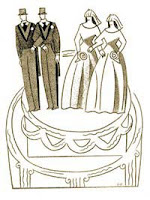
Same-Sex Relationships

For those interested in the topic, there is a fascinating posting on the issue of same-sex relationships and the church, along with quite a discussion in the comments section, on the Faith and Theology blog. The post is entitled, "Twelve Propositions on Same-Sex Relationships and the Church," by Kim Fabricius. Several of the propositions address issues of biblical interpretation and hermeneutics. To access it and read the debate, click here.

Ezra's Place among Yehud's Priests

Ezra, priest and scribe
Yesterday's post on Nehemiah 8 got me thinking about Ezra's place among Yehud's various priestly groups. I want to temporarily put aside expository and homiletic questions, and look briefly at the some of the social-scientific questions surrounding Ezra.

Yehud of Ezra's time contained three main priestly groups: the Zadokites (behind Ezekiel, Zechariah, etc.), the Aaronides (behind 2 & 3 Isaiah, etc.), and the Levites (behind Malachi, etc.). At first glance, Ezra appears a good candidate for a Zadokite priest. Ezra 7:2 calls him a son of Zadok. At the same time, however, he appears to distance himself from the Zadokite leadership of the postexilic temple in Jerusalem.

In Nehemiah 8 (see yesterday's post), he works the crowd outside the temple precincts. He surrounds himself with Levites and laity, with chief priests nowhere to be seen. Ezra's mission to eliminate false, syncretistic worship in Yehud set him against some of the temple leadership involved in such syncretism (Ezra 9:1-2; 10:18-24).

Nehemiah 8:7 pictures Ezra's team as a group of Levites. This is not surprising, given that the book of Malachi, which, like Ezra, confronts false worship among the temple leadership, takes a distinctly Levitical point of view!

Ezra seems even more aligned with the Aaronide authors of the Isaiah traditions than with the Levites. His mission to eliminate syncretism directly parallels the polemics in both 3 Isaiah and the Aaronide Priestly Torah against mixing Yahwism and foreign worship practices (e.g., Genesis 28:1 [PT]; Numbers 25:6-9 [PT]; Isaiah 57:4-8; 65:3-5; 66:17).

As Joseph Blenkinsopp has written, Ezra's prime supporters in Yehud and the group behind the 3 Isaiah writings appear to be one and the same. Isaiah 66:5 identifies the authors of the Isaiah Scriptures as a group of “tremblers,” quaking in awe at God. In the book of Ezra these same “tremblers” appear as Ezra's colleagues in his reforms (9:4; 10:3). Like him, they are oriented on the priestly torah and the torah's struggle against adulterated worship of God.

I am thinking that although Ezra may have had a Zadokite, central-priestly pedigree, he is not best thought of as a Zadokite like Ezekiel. Rather, we must consider him a champion of the Aaronide concerns of Scripture and a person more than willing to form a "bipartisan coalition" in order to defend those concerns.
The Scripture that Ezra reads to the people in Nehemiah 8 appears to be something like our present Pentateuch, containing theological strands from all of Israel's priestly groups. This Scripture, like Ezra's policy, upholds a stance of conversation and coalition.

Tuesday, January 16, 2007

In What Sense Are Proverbs True?

I recently posted a question on the nature of proverbs over on John's blog, Beginning of Wisdom. Proverbs to the effect that the wise prosper and the wicked suffer do not work well as simple empirical observations. How then are we to understand their quality of truth?

I found John's answer helpful. To check out his full reply, click here. Here is a brief excerpt from what he writes:

...like the Psalmists I think the sages as often base their advice on what the world’s structure should be as what it actually is. Although this may appear to dodge the question, I think it points to the power of the sayings of the sages as “world making,” just as the Psalms are often described as being (e.g., Brueggemann). Proverbs, like Psalms, sometimes present the world with all its injustices but other times portray the world as it should be. In so doing they confront and challenge our own (often cynical and faithless) conception of God’s justice in the world.

Turns out, John has written a full article in this area, which is available in following collection:

Seeking Out the Wisdom of the Ancients:

Seeking Out the Wisdom of the Ancients:
Essays Offered to Honor Michael V. Fox on the Occasion of His Sixty-Fifth Birthday

Edited by Ronald L. Troxel, Kelvin G. Friebel, and Dennis R. Magary
Eisenbrauns, 2005
xxviii + 507 pages, English
Cloth
ISBN: 1575061058
List Price: $59.50
Your Price: $53.55

Prophetic Humor...


HT: Chuck H.

Labels:

Update on Sudan Program in Biblical Languages


I have word from Duke and Ellen Davis today that our ECUSA missioner to Sudan, Lauren Stanley, has been told it should be safe for her to return to Sudan, hopefully by this coming April. If all goes well, Ellen, my student Phoebe Roaf, and their whole group should be able to have their visas reactivated this Spring for likely travel to Sudan in late June to mid-July! Praise God!

At the moment over in Renk there has been a Hebrew session taught last week (by local staff?) that went quite well. Also, Alan Storey from South Africa is currently there, and requests our continuing thoughts and prayers. I shall post any updates on all this as I recieve them.

3 Ephiphany, Year C: Nehemiah 8:1-10

The appointed lesson for this coming Sunday, the third Sunday of Epiphany, Year C, is Nehemiah 8:1-10. The passage recounts Ezra's reading and teaching the Torah, renewing the covenant in postexilic Judah.


Please do not be put off by the topic of Law / Torah, and, certainly, please do not mourn and weep as Ezra's audience did when confronted with the torah! This passage is not about legalism and rigidity. It is about finding life, finding true joy. It would make for a great sermon or homily this Sunday.

Do consider fashioning your sermon around Nehemiah 8. There is so much misunderstanding about applying God's torah, about biblical authority, and about related themes these days, we need the insights of this passage!

A few things to notice. First, God's teaching is not being forced or shoved on folks. The people have requested Ezra to bring Moses' books before them (v. 1). God's people naturally long for God's teaching, because it restores our souls and nurtures our relationship with God (cf. Pss 19:7-9; 119:72).

To his credit, Ezra makes God's word in Scripture easily available to everyone who longs for it. He reads it to the people outside the temple area, in an open public area where even ritually defiled folks could be present (8:1). Men, women, and children are all included (8:2).

Hearing the reading, the people sense their distance from God and weep, but Ezra will have none of this type of reaction (8:9). This is a time of new beginnings, a time of renewed intimacy with God. God's torah is a wedding present. It allows for a tangible commitment to God and for growth in the relationship. The torah gives form and structure to the love of God.

The torah's meaning is not simplistic, black and white, and self-evident. Understanding Scripture requires translation, interpretation, and pause for reflection. Do not allow the people in the pews to miss how the Levites help the people understand the law (8:7-8). The church today is struggling against divisions that threaten to tear us apart. We greatly need to understand that Interpretation and New Learning always accompany the understanding of Scripture (בין ; cf. Ps 119:27). Understanding and insight (שׂכל--8:8) are not automatic. Working hard on Scripture's meaning is in no way an act of unfaith or a questioning of Scripture's authority.

Comments Welcome. Expostion of Nehemiah 8 to be continued; stay tuned...

Monday, January 15, 2007

More on MLK Day


Dr. Chris Brady gave a talk today at a PSU service commemorating Dr. King. Clearly he read a lot of King's sermons and put a lot of thought into the talk. Take the time to check it out, by clicking here.

Non-Violent Resistance: A Few Theological Reflections

On MLK day, a few draft paragraphs from a book I am writing that's currently on the "back burner":


When you turn to beat someone, you figure he or she will fight back or run, not purposely stand there and take it. When you humiliate them, they should spit back or at least offer rebuttal and defense. If instead they hold steady and resolutely bear your attack, you have completely lost the upper hand. If you continue your assault, any righteous veneer to your aggression will quickly shade to abuse. By turns, you will find yourself a brat, a bully, and a brute. In the end, you will make yourself into a sadist who cannot bear to look in the mirror. Your victim’s servanthood has triumphed. The victory will be hollow, however, for the real goal of servanthood is to change people’s hearts, not to “heap burning coals on their heads” (Rom 12:20).

Genuine servanthood strives not to quash enemies but to turn them into friends, to transform their very natures. Presenting no resistance to violence, it deprives the enemy of its disposition to be hostile. Exposing a soft underbelly, it shows the enemy that it can let go of its fear. By meeting violent malice with the mystery of nonviolent, suffering love, it offers the enemy something much more valuable than victory by force. To receive the freely offered security and worth of true friendship is a priceless gift, which one need not hoard in fear.

More on the Divisions Troubling the Church

Post and Courier
Biblische Ausbildung is "In the News."

Yup, I was interviewed for over an hour for a recent article that has now appeared in the Charleston Post and Courier (click here). It is a summary of the current divisions within ECUSA by reporter Adam Parker, entitled: "Episcopal Church Fractured by Different Beliefs." The article covers a lot of ground in a short space, and attempts to be ballanced. I'm not quoted, but my friend Kevin Wilson is, and this blog is listed among the resources at the bottom of the article.

Here is a brief excerpt. It quotes Rev. Jan Nunley, who questions whether those folks leaving the Episcopal Church to realign with African Anglican churches are fully prepared for what they are in for:

A realignment with the Church of Nigeria or Rwanda would likely come with a good dose of culture shock, Episcopal Church spokeswoman Nunley said. For example, the African primates were instrumental in getting a resolution passed at the 1988 Lambeth Conference condoning polygamy. And women are not allowed to be priests.

Many of those seeking realignment say the national church has oppressed them, but it's likely that one of the African churches will eventually impose its theology and practice on its American brethren, and "the constitution of the Church of Nigeria offers no possibility for appeal," Nunley said.

Sunday, January 14, 2007

U2 and Martin Luther King

"Pride (In the Name of Love)" is the second song on U2's 1984 album, The Unforgettable Fire, and was released as the album's first single. Written about Dr. Martin Luther King, Jr., it is one of the band's most recognized songs. In this YouTube video, the song is accompanied by an artist sketching MLK in black ink.


The Lyrics are as follows:

One man come in the name of love
One man come and go.
One man come he to justify
One man to overthrow.
In the name of love
What more in the name of love.
In the name of love
What more in the name of love.
One man caught on a barbed wire fence
One man he resist
One man washed up on an empty beach
One man betrayed with a kiss.
In the name of love
What more in the name of love.
In the name of love
What more in the name of love.
Early morning, April four
Shot rings out in the Memphis sky.
Free at last, they took your life
They could not take your pride.
In the name of love
What more in the name of love.
In the name of love
What more in the name of love.
In the name of love
What more in the name of love.
In the name of love
What more in the name of love.

Labels: ,

Apple's New iPhone?

I post this with apologies to Chris and his recent posts on the iPhone (click here).

cartoon from www.weblogcartoons.com

Cartoon by Dave Walker. Find more cartoons you can freely re-use on your blog at We Blog Cartoons.

John Scott's Composition of Psalm 84

Saint Pauls Cathedral Choir performs John Scott's composition of Psalm 84, "Behold, O God Our Defender," presumably under John Scott's direction. Very uplifting, spiritually, no?

Labels:

Saturday, January 13, 2007

The Ewer from Canaanite Lachish

Lachish Ewer
For a short, helpful discussion of the famous Lachish Ewer, see the recent post on it at the Abnormal Interests blog (click here).

The inscription on the vessel, written in Proto-Canaanite, mentions a sheep offering for the Canaanite goddess Elat.

Who is the goddess "Elat"? It is interesting that the inscription on the ewer is written in such a way that the name of the goddess appears directly over the image of a stylized sacred-tree, a well known symbol of the fertility goddess Asherah. Elat may well be Asherah, the consort of El.

For the details of this argument and additional supporting evidence, click here, and take a look at a helpful WebPage discussion.

detail of ewer inscription

Beth Shemesh

Old Testament Professor Lawson Stone is currently blogging from a study tour class in Israel/Palestine. He has detailed posts and some neat photos related to the various sites they are visiting and studying. For his recent trip to the Shephelah and "Samson Country," click here.

Beth Shemesh was a Philistine town that fell into the hands of the Israelites in the pre-state, village period. It is mentioned in the early narratives of Samuel about the ark.


Beth Shemesh
Here is a brief excerpt from Lawson's post:

Today we stood on the mound of Beth Shemesh. The Philistines controlled the city about 1200 BC, but another group took it around 1100 BC in a destruction that left what archaeologists call the “red burnt stratum” on top of ashes. We think they were Israelites. The new tenants built houses using squared stone pillars, characteristic of Israel, and, in contrast to the Philistines and Canaanites, apparently didn't eat pork!

Rutter, "For the Beauty of the Earth"

Saint Paul's Cathedral Choir performs John Rutter's amazing hymn for the Queen Mum. This in an example of the treble voice at its finest.

Labels:

Friday, January 12, 2007

"Something to Blog"

cartoon from www.weblogcartoons.com

Cartoon by Dave Walker. Find more cartoons you can freely re-use on your blog at We Blog Cartoons.

Labels:

Castagno, David with Head of Goliath

This post continues my series on Old Testament themes in the National Gallery of Art here in D.C. For the preceding post in the series, click here.

Castagno, Youthful David

A favorite theme in art history has been David's victory over the Philistine giant, Goliath (1 Samuel 17). The National Gallery owns a beautiful painted shield depicting this theme by Andrea del Castagno. Dated ca. 1450, it is entitled, "The Youthful David." (Click image to enlarge.)

The wooden shield that forms the canvas of this work is intended for ceremonial purposes, such as for use in a parade. The biblical scene fits its unusual canvas, symbolizing, as it does, the inevitable triumph of God's plans and God's ways.

Castagno, detail

Notice how David's hand seems to reach out at the viewer from the shield. David's posture asks the enemies of God to stop and think. Vulnerable David, youthful, untrained, without armor (see vv. 38-39) is paradoxically filled with power and triumph because he is loved and chosen by God, despite his flaws. Those who would oppose him had best reconsider. David's power and kingdom are "not of this world," but stem from God's ability to use him in his vulnerability.

Goliath's head, with stone

A second "moment" in 1 Samuel 17 is also portrayed here in that Goliath's head already lies at David's feet (see v. 51). The disturbing image of the giant's head also gets the viewer to stop and think.

Fifteenth-century Florence, the provenance of the painting, was a small political entity within its world, and would have identified with the themes of vigilance and reversal in the work. The danger for this audience, of course, would have been reducing God's purposes and the power of God's reign to the mundane, banal politics of their contemporary situation.

Labels:

Thursday, January 11, 2007

2 Epiphany, Year C, continued

For the preceding post on this Sunday's lesson, Isaiah 62:1-5, click here.

Let's look more closely at the exquisite poetry of v. 5 of the lesson. The perfectly balanced sounds of the verse are exhilarating in the Hebrew, as I've diagrammed in this image from the TanakhML verse analyser (click to enlarge):

Isa 62:5

The two poetic lines here interconnect as the ending sounds of the two cola within each of them echo and repeat each other. The verse is a rare Hebrew rhyming quatrain!

The poetic echoing and doubling corresponds to a double joy of Zion in the verse. The NRSV emends the text, so that God is Zion's loving partner in each poetic line (see also the NAB, NJB, and Message). In the Hebrew and the other early versions, however, Zion is embraced from two sides: her many new children embrace her (v. 5a) and God rejoices over her (v. 5b). (See NJPS, NET, NIV, NLT, NASB). (I think it is probably best in v. 5a to render the second בעל as "commit to" or "take to themselves" rather than "marry." This will avoid the impression that Zion has two husbands!)

The theological thrust here goes well beyond the wonder of God's joyful embrace of us, God's own beloved spousal people (v. 5b). God is at work removing infertility and barrenness from Zion, filling Zion with a sprouting, budding blessing of offspring.

No Longer Barren
Zion, like Sarah in Genesis, had suffered the tragedy and loss of barrenness throughout the exilic period. Now, God is fulfilling God's Genesis plans to bring a wondrous, sacred fruitfulness into being on earth.

As God's epiphany proceeds, Zion is budding with new children (cf. Isaiah 49:20; 54:3; 60:21). She is fulfulling God's Genesis plan for her to "be fruitful and multiply."

This message can surely be preached. God is at work in Epiphany season to bless God's spent, demoralized people so that their spiritual vigor abounds, their vindication and praise flares up before the world, and the blessings of salvation and righteousness reverberate abroad so that knowledge of God's glory covers the earth.

Wednesday, January 10, 2007

The Old English Genesis (The Junius Manuscript)

Junius Manuscript

This is post # 6 in my series on the Sackler exhibit: "In the Beginning: Bibles before the Year 1000"; for the preceding post (# 5), click here.

The next book that caught our eye as we toured the Sackler exhibit was The Old English Genesis, otherwise known as The Junius Manuscript. This work, stemming from England (Canterbury?) of about 1000 ce, consists of rare Old English poetic paraphrases of biblical narratives, particularly of Genesis. As you can see from my photo (above; click to enlarge), the poetry is accompanied by a series of illustrations of Genesis, drawn in red, blue, and green inks. (Actually, the books has sketches and drawings by two different artists using two different color-sets and styles.)

Here (see photo above) on p. 84 of the book we have three key scenes from Genesis 12, early in the Abraham story. In the top scene from Gen 12:1-3, God (with a halo but no beard) uses vivid gestures to call Abraham out of Haran. Sarah and Lot watch from Abraham's house. In the middle scene, the company of Abraham makes the journey to Canaan. In the bottom scene, which illustrates Gen 12:7, the Lord reappears to Abraham, saying, "To your descendants I will give this land."

Call of Abraham

In this detail that I've made of the left side of the middle register, you can see Abraham guiding his whole entourage, including Sarah and Lot, out of Haran and toward Canaan. Abraham's and Sarah's hands seem to interconnect, but Abraham looks determinedly forward, and his left hand, holding a spear, also seems to point in the direction of God's promised land.

Tuesday, January 09, 2007

Best Blogging of 2006!

Best in Show!
Tyler Williams at the Codex Blog has now posted his list of the best biblical studies blog posts of 2006. Click here. He picks the best blog post or series of posts for each month of the year and also names the runners-up. There is a lot here to enjoy and to study. Thanks Tyler for all this work!

Recent Updates to MAR-SBL Program

MAR-SBL

Quite a few missing titles and abstracts have come in over the past few weeks to fill out our program for the Regional SBL Conference in Baltimore this upcoming March 1-2. I've now got the most recent drafts of the program and abstracts posted on our MAR-SBL Web Site. For the most current draft of sessions, click here. For the most current draft of abstracts, click here. (Both of these documents are PDF files.)

Labels:

Second Sunday of Epiphany, Year C: Isaiah 62:1-5

The appointed lesson for this Sunday, 2 Epiphany, Year C, is Isaiah 62:1-5. I have recently posted on this text, so please check out my preceding comments. Click here for some reflections on the theology of beauty in the text. Click here for somes notes on the identity of the text's speaker and on his message of proclamation and mission. The text is exceedingly rich, so let our interpretive work continue...


There is a rather full discussion of the text's historical criticism over at the CriVoice site, which you can check out by clicking here. Here is a short excerpt from what Dennis Bratcher has to say there that I found helpful:

This new light [that dawns in our passage (62:1)], the restoration of Israel as the people of God, is a light that will shine into the world. The Hebrew actually speaks of the light going forth: "until her justice goes forth like the dawn, and her salvation like a burning torch." Verse two clearly picks up this idea that "the nations will see your vindication." In any case, this "light," this new presence of God with Israel that brings restoration and vindication, will shine so brightly that it will easily be seen by "the nations."

This continues the theme of mission that has come to dominate restoration language in Isaiah. Israel is not to exist only for herself, but is called to be "a light to the nations" (Isa 42:6, 49:6). If the purpose of God’s people is to be a light to the nations, it is only logical that they cannot be that light unless they themselves have the light. In other words, the restoration of Israel is not simply for the purpose of restoring the nation of Israel as God’s people. It has a deeper purpose, that of bringing the "light" of restoration to Israel so that light of God can shine into the world.

...We lift the light to the nations! But we do so with humility, knowing that not so long ago we were "forsaken" and in darkness. Perhaps if we retain that humility, that profound sense of God’s grace that so recently has given us a new name [62:4], we will be able more authentically to bear witness to the transforming light of God's presence. Perhaps finally, it is in that humility, that sense of grace, that our own light shines most brightly.

Discussion to be continued. Stay tuned...

Neat Link: The OT's Humble Messiah

I heartily recommend a recent post on "The Interpretation of Zechariah 9:9" (click here) by John Hobbins over on his Ancient Hebrew Poetry blog.

In response to a query I left, John took the trouble to expand his discussion to include some exegesis on the striking humility of the messianic figure in the verse. To see his very helpful treatment, read his short essay by opening his PDF file.

Here is a short excerpt from his essay (I truncated some of the Hebrew, so please go to his actual post to see the genuine article):

Two proverbs are apropos to the subject matter:

As for scorners, he [Yahweh] will scorn them,
but he accords favor to the lowly [לַעֲנָוִים] (Prov 3:34)
Better to be humble among the lowly [עֲנָוִים]
than divide spoil with the proud. (Prov 16:19)
The ketiv of עֲנָוִים in both instances, it might be noted, is actually עניים.


Yahweh also favored Moses, because, as Baruch Levine translates, “he was exceedingly unassuming [עָנָו], more so than any [other] person on the face of the earth” (Num 12:3; Baruch A. Levine, Numbers 1-20: A New Translation with Introduction and Commentary [AB 4; New York: Doubleday, 1993] 314).

Monday, January 08, 2007

GOE exams 2007 are over!

Congratulations to our seniors who have completed their General Ordination Exams. To check out their scenes of relief and celebration, click here.


Illuminating the Israelite Family Compound

I have created a short video from scratch with the help of my friend and colleague Joseph Constant here at Virginia Seminary. In it, I try to use comparisons with the traditional Haitian Lakou to flesh out the workings of the typical homestead of the Israelite extended-family or בית אב. I've posted my video on YouTube and nested it below in this post, so please take a look at it and add your comments when you get a spare five minutes.

Joseph Constant, the person whom I interview in the video clip, is himself from Haiti and has loaned me the following idealized painting of a Lakou family compound in his native land (click to enlarge):


You can see from the painting that, like the Israelite family compound, the Haitian compound consists of multiple dwelling units clustered around a shared courtyard. Joseph describes in the video the sorts of typical activities that take place in the various parts of the compound, the importance of keeping the compound within the family, and the place of dead ancestors in its ongoing life.

The idea of comparing the Bet-'Ab and the Lakou came to me from two directions. Joseph himself first showed me the painting above and suggested the parallelism after hearing some of my OT-1 lectures on the archeology of the Israelite family. At about the same time, I heard a fascinating talk at the SBL in our Social Sciences section by Carolyn S. Leeb, which made the self-same comparison (23 November 2002, at the SBL annual meeting in Toronto).

Sunday, January 07, 2007

Are Modern Palestinians Descended from the Canaanites?

No, of course not. It is not politically correct to make a point of this, of course, but I actually have people asking me about this as an honest question, so I making this post.

The ancient Canaanites were neither Arabs nor did they call themselves "Palestinians." Further, over the course of time, like many ancient peoples, they have vanished from history. In no sense are the Canaanites the ancestors of the current Arab population in Palestine, which arrived there in the course of the current era.

John J. Collins, in his book Encounters with Biblical Theology sums up the actual facts of the matter well:

The land [in question] was not called Palestine in the Late Bronze Age --- the name in fact comes from the Philistines, who were invading the land at approximately the same time as the Israelites.... The modern Arab Palestinians only emerged as the people of this land well into the Common Era. The ancient Canaanites are of no genetic relevance to the modern Palestinians. (p. 42)

I do not intend this post in any way to side with either the Israelis or Palestinians in the current conflict. Nor am I arguing that the Palestinians are not allowed to draw analogies between their situation and that of the Canaanites, if they choose to do so. (I think many might prefer to claim descent from Abraham, a sojourner among the Canaanites.) I simply want to get the actual socio-historical facts straight here for those who have questions or doubts.

Ancient Hebrew; Rabbinic Hebrew; Israeli Hebrew


I'm enjoying the current Biblical Blog Carnival (# 13), which I mentioned a few posts ago. I wanted to make note here of the link there to the Simon Holloway post / discussion about getting clear on the different Hebrew languages (click here). In my experience, the general public and even many university students are not aware that firm lines must be drawn between, say, Biblical Hebrew and Rabbinic Hebrew.

Beginning by 200 c.e., the Rabbinic Hebrew of such early Jewish literature as the Midrashim and the Mishnah emerged as a distinct new language over against earlier Hebrew. One of the key marks of this, according to Simon H., is Rabbinic Hebrew's consistent and clear use of verbs to convey tense. This differs from the meaning given to verbs by prefix forms and affix forms in classical Hebrew, where "aspect," not "tense," is often the meaning being conveyed.

Now, what about the status of modern Israeli Hebrew? Simon H. notes that it was Tyler Williams in a post on his blog (click here) who recently posted on Ghil’ad Zuckermann's arguments that modern Israeli Hebrew is not the language of the prophet Isaiah (or of other biblical figures). Modern Hebrew is a whole new animal.

Simon is suspicious of Zuckermann's arguments in his main post, but in the comments section the discussion gets interesting. One reader, David Cohen, points out that Zuckermann has indeed presented real evidence that "Israeli" is marked as new language by more than just a new vocabulary / lexicon. I note that one of the articles where Z. presents this work has a provocative title: "Israel’s Main Language as a Semi-Engineered Semito-European Hybrid Language."

Saturday, January 06, 2007

Update: Archaeology of the Exodus

In the current issue of BAR (33/1 for January/February 2007), James K. Hoffmeier has a very interesting article summarizing the current state of knowledge on the archaeological context of the Hebrews' exodus from Egypt. One of the objections you sometimes here to the historicity of an exodus is that Egyptian forts controlling the Sinai would have prevented it from ever happening. Hoffmeier, who has been excavating at one of those forts (Tel el-Borg) maps out in this article how the Hebrews' route could have avoided these dangers. I don't want to violate any copyrights, so let me stop there and recommend the article to you.

I have made the following teaching slide showing Hoffmeier's proposed route of the Exodus from Egypt (click to enlarge):

The Exodus Route

Biblical Carnival 13, Well Worth a Visit!

Biblical Studies Carnival XIII
Tyler, over on his Codex site, has posted Bible Carnival XIII (click here). It is a wonderful collection of links to the best postings in the past month in the Blogosphere on biblical studies. Many of the posts that he links to are of very high interest and quality, so don't miss it!

Friday, January 05, 2007

1 Epiphany, Isaiah 43:1-7, cont.

The lesson for this Sunday, the first Sunday after Epiphany, is Isaiah 43:1-7. For the preceding post on our text, click here.

Isaiah 43

The lesson has a magnificent, solid center in v. 4a: "Because you are precious in my eyes, you are honored, and I, I love you." God's commitment to us is quite striking here, but even more moving is God's declaration of intimate love.

The beginning and end of the poem echo each other with a striking Inclusio. God's intimate love and care for God's people is clear in that God "created" and "formed" God's people (vv. 1 & 7). The poetry moves from a magisterial notion of "creation" to a more hands-on notion of molding and "forming." Then the poetry declares this creative work of God to be ongoing, not just a divine activity of long ago.

God is "redeeming" us (v. 1). Redemption is new creation; in Isaiah it is on a par with God's work as Creator of the universe. Redemption, in Isaiah, is also a father's and husband's act of love. God extricates us from the waters, fires, and lions of "exile" and calls to us, "You are Mine" (v. 1). That theme of (re-)union with God, of wedding God in love, is a big one in Epiphany season. Epiphany celebrates the royal nuptials, when God and God's people (re-)unite in a burst of glory.

God is destining us, drawing us toward "my glory" according to v. 7. This is why we are created. When God shows off God's beauteous glory in God's people, earth's nations take notice and are drawn in. That is a key theme of Epiphany season! Is it present here in this lesson?

When God gathers Israel's "offspring" from the four points of the compass, is this an opening of all nations to be drawn in? Perhaps it is, although the poetry is ambiguous. God does appear open to drawing in "the ends of the earth" (v. 6; cf. 45:22!). God does appear willing to include "everyone who is called by my name" (v. 7), and Isaiah 44:5 invites all of us to write on our hand, "Belonging to the Lord."

Thursday, January 04, 2007

Introducing Our Daughter To Be!

Wednesday, January 03, 2007

Joy!

There is great joy tonight in the Cook household. I am cross-posting this from Catherine and my personal blog, where we have our postings on our two-year wait to bring home a daughter from China. That wait now finally appears to be over!

Stork Alert!

We see our referral at 3pm tomorrow!

She is a beautiful, healthy baby girl, whose Chinese name is You Fu Xuan

Birthdate: March 30, 2006

Location in China: The Social Welfare Institution of Fuling, in Fuling District, Chongqing City, Peoples Republic of China.

Fuling is situated along the Yangtze (or Changjiang) River in what until the late 20th century was part of Sichuan Province but is now the Chongqing Municipality, an autonomous region set apart to accomodate the construction of the Three Gorges Dam Project. Sichuan is known for its fertile earth, generous growing season and mountainous inaccessibility (until recently) to the rest of the world. Many Sichuanese call their province "Heaven on Earth," because of its food and beauty.

Gerald Ford and Virginia Seminary, Some Reminiscences

My good colleague, Dr. Robert Prichard, professor of church history, has compiled a few short notes about President Ford and his association with our neck of the woods. The Immanuel-Church-on-the-Hill that he refers to is the parish church up here on Seminary Hill. The parish has a history of sharing our seminary chapel, Immanuel Chapel, with VTS. Here are Bob's reminiscences:


[Ford] was an active member of Immanuel-on-the-Hill for many years, which meant that he often worshipped in Immanuel Chapel. He continued to attend Immanuel while he was Vice President. Matters changed after Nixon's resignation, however. On the following Sunday he showed up at Immanuel with the full contingent of Secret Service agents. The then rector of Immanuel, Bill Dols, rushed home from vacation to preach on that Sunday, much to the disappointment of his assistant, Patricia Merchant Park. The following Sunday, Ford started attending St. John's, Lafayette Square.

One of the stories that was still circulating about Ford in the early 1980s was that he had been around the seminary enough to notice that the grounds crew stacked and stored wood from the trees that are cut down on campus. In those days they did so on the wood lot where the Hadlers and the Edmondsons now live. One day someone at the seminary saw that a strange car was parked in the wood lot and went to see who it was; it was then Congressman Gerald Ford filling his car with fire wood.

The Ford children went to George Washington High School (today a middle school). In the early 1970s son Michael Gerald Ford (b. 1950) confused the Diocese of Virginia's Commission on Ministry by beginning study at Gordon-Conwell Theological School without going through the appropriate channels for postulancy in the Episcopal Church. I was in the ordination process from Virginia at that time, and overheard several confused conversations among commission members about him. I believe that Michael Ford pursued ordination in another denomination and currently works in administration at Wake Forest.

1 Epiphany, Year C: Isaiah 43:1-7

The appointed lesson for this Sunday, the first Sunday of Epiphany, is Isaiah 43:1-7. It is a beautifully poetic word of assurance and salvation to us. The twice repeated command "Do not fear!" (vv. 1 & 5) sounds the theme of rescue and deliverance at the start of each of the poem's stanzas (strophes). The phrase marks the prophetic form of this text as a priestly oracle of salvation.

But what are we needing to be saved from? What are the waters that threaten to overflow us (v. 2a)? What is this fire that threatens to scorch us (v. 2b)?

Rubens

One clue comes down at v. 6. God's people are being "detained," "shut up." Another clue comes from the poetry immediately before this lesson. According to 42:25, God's people now feel the "heat of God's anger." They are in the midst of "fire" and "flame," just as in our text (43:2b). These are allusions to the Babylonian destruction of Jerusalem in 586 bce and the exile of God's people to Babylonia.

Again, according the preceding poetry (42:22), God's people are "trapped in caves," "hidden away in prisons," "a prey." This is the same situation that was at issue in my earlier posts this week on Daniel in the Lion's Pit as an image and symbol of exile!Rubens This is probably no coincidence. The book of Daniel is known to draw intentionally on earlier Scriptures, such as the poems of Isaiah 40 - 66.

In exile, one is in a "pit" or water-cistern, where the waters of chaos threaten to flow over one's head and "cut one off" (see Lamentations 3:54). Isaiah knows that the life of faith has repeating low points of darkness and judgment, when such "waters" rush in and even rise up to the neck (see Isaiah 8:7-8).

As I mentioned in those posts on Daniel 6, for the faithful to be restricted by exile means for them to be left unsupported by kin, neighbors, and the public worship of God. It is to feel the loss of true community, where mutual love, unconditional support, and other values of God are upheld and celebrated. In this sense, God's people today are very much in "exile" from our true home in God's reign.

The good news of the salvation oracle in Isaiah 43 is that God directly addresses this experience of exile. The heart of the good news comes smack in the middle of the lesson at v. 4a...

More soon. Stay tuned...

An "Epiphany" in the Lion's Pit

A few more words, if you don't mind, about my preceding post (click here) on Rubens' painting of Daniel in the Lion Pit. Imagine the moment in time depicted in the art work. Surely you'll agree that it is an Epiphany moment, appropriate for the upcoming church season of Epiphany. Both Daniel and the lion raise their eyes expectantly.


Epiphany is associated with light. Light shines down into the darkness of our exile, into the darkness of our confinement and our parched, dried up bones.

Epiphany is also a very public thing, and greatly differs in this regard from the Nativity, which feels much more private and intimate. In Daniel 6:26-28, Darius proclaims Daniel's rescue to every race, color, and creed on earth.

I'm sure not everyone was glad to hear the news. The lions in Rubens' painting look unhappy to be woken up so early at the break of day (Daniel 6:19).


Earth's nations and people will not necessarily greet Epiphany with joy and relief. Like hungry lions awoken too early from sleep, they may just be ticked off!

One of my professors back in seminary days in the mid 80s, Bill Muehl, once used a sermon illustration about a little girl socking a small boy in her Sunday School class. It was Easter morning, and the boy had just been explaining that Jesus Christ is risen today.

The manifestation of God's power can be jarring. It can disturb our ease. It can wake us up and open our eyes to entire new paths and challenges of which we may not have dreamed...

Labels:

Tuesday, January 02, 2007

RBL Review: Philip Davies Reviews J. Collins, The Bible after Babel

Just out in RBL, this review is not to be missed, since Philip Davies and John Collins are two senior OT scholars who might certainly be expected to lock horns. To read the review, click here.

Of particular interest is what Davies has to say about Collins' treatment of the minimalist historians (who would include himself, Thompson, and Lemche). In fact, helpfully, Davies argues that the crisis in biblical historiography that has been initiated by the minimalists is best seen as a return of older historical-critical principles [I would add with a vengeance], but a return that has been strongly "invigorated by ideological and literary criticism." He particularly (and rightly, I think) stresses the role of ideological criticism in what folks like Thompson and Lemche are up to. “New Historicism,” he writes, "with which [minimalist historicism] has more in common [than with postmodernism], has Marxist roots."

Again, helpfully, Davies and Collins agree on the place of "mischief" in the work of the minimalists. In fact, Davies emphasizes this factor, and is very clear on the role that contemporary politics, especially the conflict in Israel/Palestine, plays in the minimalists' historiographical work. He writes, "Collins has the right instincts, even in identifying the element of mischief in some 'minimalist' writing. But that mischief itself is more serious than he recognizes and makes no sense without the wider political and religious context in which ancient Israelite and Judean history is being contested. 'Playing' is a postmodern theme, indeed, but can also pose a direct challenge to the 'serious' discourse in which so much biblical criticism is conducted."

Rubens, "Daniel in the Lions' Den"

This is my fourth post on our SBL tour of paintings with biblical themes in the National Gallery of Art in DC. For the preceding post in this series, click here. The painting I would like to look at in the present post is Peter Paul Rubens' "Daniel in the Lions' Den," c. 1614/1616.


Take a moment to let yourself be drawn into the painting. It does not take much effort, since the work virtually summons you into its action. Some of the lions stare out directly at us, such as the one in the detail image below and the one in the center, up on the rock. Rubens uses a life-size scale (the painting is huge), details rendered from actual observations of lions, and a certain theatricality to summon us into the very reality of Daniel 6.

"Well, it's unlikely that I personally will ever end up in a lion pit," you might say. But, indeed, God's people today perhaps are in a lion pit. This pit represents the exile, confinement, and isolation of God's people. It is the place where we feel "cut off" from friends, family, and neighbors and from God and the joy of God's values and lifestyle.


Note the skull in the bottom center of this detail image (above) and the other human bones included in the painting. Daniel is in grave, imminent danger. He has remained alive thanks only to God's protective presence (Daniel 6:22). Daniel is in a grave, a pit, a place of skulls and bones. Above Daniel's head, a stone covering the pit has just been rolled away.

Such a pit is symbolic of exile of being "cut off" from life and community. Distraught at Jerusalem's destruction, Lamentations 3:53 cries, "They have silenced me in the pit. And have placed a stone on me." Verse 55 continues, "I called on your name, O Lord, Out of the lowest pit."

It does not take too much work to see the darkness of the pit around us in the here and now. With so much death in Iraq and the Middle East, we daily feel the de-humanizing chill of the pit. Like Daniel in the darkness of exile, we daily feel the pain of bungled justice in our world and we experience firsthand the ineptitude of our officials and leaders. Are those in power today much different from King Darius in Daniel 6?

The gospel message of this painting is that the stone above our heads will indeed be rolled away. The light of the season of Epiphany is indeed about to shine. More on this angle of interpreting the painting in my next post...

Labels:

AIDS Beyond the Numbers

The Urbana 06 conference that just concluded had a strong HIV/Aids focus, and produced a short video clip that is well worth watching: "AIDS Beyond the Numbers." It starts by giving the statistics for 2006 and then moves to look at several individual stories. It ends on positive notes of moving forward and outreach. To see the video, click here and press the "play" button on the video player that pops up. (HT: U2 Sermons)

Labels:

Monday, January 01, 2007

St. Bede's Commentary on Proverbs (Sackler Exhibit, Post 5)

For the immediately preceding post in this series, click here.

Another book that caught our eye in the Sackler exhibit --- "In the Beginning: Bibles Before the Year 1000" --- was Bede's Commentary on Proverbs, written in Northumbria (Wearmouth-Jarrow), northeast England, in the second half of the eighth century (click to enlarge):


The author of the commentary, the scholar monk Saint Bede, also called the Venerable Bede, was one of the greatest of all Anglo-Saxon scholars. A true scholar, he once turned down the job of prior of his monastery so that he could continue to devote his energy to collecting and comparing biblical manuscripts, studying earlier patristic commentary, and generating his own systematic exegeses of Scripture.

I've made the following slide (click to enlarge) to show the three different scripts in Bede's commentary and what each aims to present:


A new section of the commentary begins with the stylized, highly decorative "P" two-thirds of the way down the page. The illuminated "P" itself is worthy of note, combining as it does Irish/Anglo-Saxon decorative interlace inside the square top of the "P" and much earlier, late Roman ivy-leaf flourishes at the bottom of the "P."

The "P" begins a bibilical quote (Proverbs 10:1, "The Proverbs of Solomon") written in an all-capitals script, English unical, developed in Bede's own Anglo-Saxon area around the time of his birth.

The scribe then shifts to a new style, "Insular minuscule," as Bede's commentary on the text begins. This elegant script dates to the mid-eighth century, and came into its own in the copying of Bede's own writings. Bede's comment, by the way, explains the reason why a brand new preface to "Solomon's Proverbs" appears here in 10:1, after the book of Proverbs is well under way. He writes that the new preface is due to the fact that a "new mode of saying" begins here, now that the book's initial discourses concerning wisdom and folly have run their course in chs. 1 - 9.

Finally, note the presence of Latin glosses on the page, added between the lines in a lighter, smaller hand. These interlinear notes were added in the tenth century by one Aldred, a member of the Lindisfarne community. I've marked two such glosses at the top of the page, where the quote from Proverbs 9:18 in the Vulgate reads, "And he did not know that giants are there, and that her guests are in the depths of hell." The glosses identify the "giants" and the "guests" who are mentioned here as "demons."

New Year's Fireworks Display in Seattle at the Space Needle

Labels:

Happy New Year 2007!